Click for Summary of Water Pressure Vs. Flow Rate
Water pressure is the force pushing water through pipes, measured in PSI (pounds per square inch). Flow rate is the actual volume of water delivered, measured in GPM (gallons per minute).
Distinction Between Water Pressure and Flow Rate
- Same pressure, different flow: Pipes of different sizes connected to the same source have identical pressure, but larger pipes deliver significantly more water
- What you actually experience: Flow rate determines how much water comes from your fixtures, not pressure
Why This Matters
Most “water pressure problems” are actually flow rate issues. You can have high pressure but poor flow due to:
- Small pipe diameter
- Long pipe runs (doubles length = 33% less flow)
- Undersized connections
Quick Example
A 1″ pipe and 1¼” pipe have the same pressure, but the larger pipe delivers 75% more water at the same pressure.
Bottom line: If your faucets have weak flow but good pressure when tested, you need larger pipes, not more pressure.
Many property owners tend to think they have issues with their water pressure. But in fact an issue with water pressure is typically part of a bigger issue involving the rate of flow of water. Your flow rate of water is also commonly referred to as volume of water, gallons per minute, or gpm. Understanding the difference when it comes to water pressure vs. flow rate is crucial to understanding the overall water flow in your home.
This article and the accompanying videos will attempt to explain in simple terms the difference between flow rate and water pressure and how to calculate each. As a point of interest, the average household water flow rate is based upon all fixtures being able to function simultaneously.
Let’s start with one simple point: If separate water lines are at the same elevation (elevation is a distinct factor), and are being fed from the identical source, the pressure inside those lines will be identical. That is regardless of the size of the lines. It is also based upon that no plumbing fixtures are running at the time the pressure test is being done.
As an example, a 3/4” water line and a 3″ water line, both connected to the same 8″ water line will have identical water pressure inside of both lines. As will the 8″ line itself. Think about this for a minute before moving on to learn more: Water pressure will be equal under similar circumstances regardless of the size of a water line. When calculating the correct size for a water service line, there are 3 primary factors:
- The plumbing fixture count
- The length of the run of the water service line.
- Classification of the building (residential, commercial, or mixed-use)
What Is The Flow Rate of Water (Gallons Per Minute, or GPM)
Simply stated the flow rate of water (gallons per minute) is the amount of water a line delivers in a specified amount of time. The flow rate is based upon some key factors. Two of the key factors are:
- The flow rate of water from a pipe (gpm) is based on the pressure at the source that supplies the pipe.
- A water pipe’s resistance to the flow of water is another factor. Note that different water pipe materials have different resistance levels to the flow of water.
A new pipe’s resistance is usually determined by two factors, the diameter of the pipe and the length of the pipe run. The longer the run, the more resistance there is. This results in less water flowing to the opening in the pipe, the desired end-point. If you’re a homeowner, the desired end-point is your shower, your sink, etc.
Length of Run of Pipe Affects the Flow Rate Of Water
The length of the run of the pipe is important. That is because as water under pressure runs through a pipe, the pipe itself applies resistance to the flow rate of water. The longer the run of the pipe, the more resistance there is. This resistance results in less flow of water at the end of the run of the pipe. In terms of replacing a water service line, a longer run of pipe may require a larger size line.
Let‘s use one particular case as an example: NYC’s water service sizing table indicates that a 50’ long run of 1” service will provide 9 gpm (gallons per minute). While a 100’ long run of 1” service will provide 6 gpm.
Therefore by doubling the length of run of pipe in this particular case, the water delivered is lessened by 33%. Obviously, this is a dramatic decrease, illustrating why the run of pipe is so vital a factor. Note that each case will vary by the pipe size and length of run.
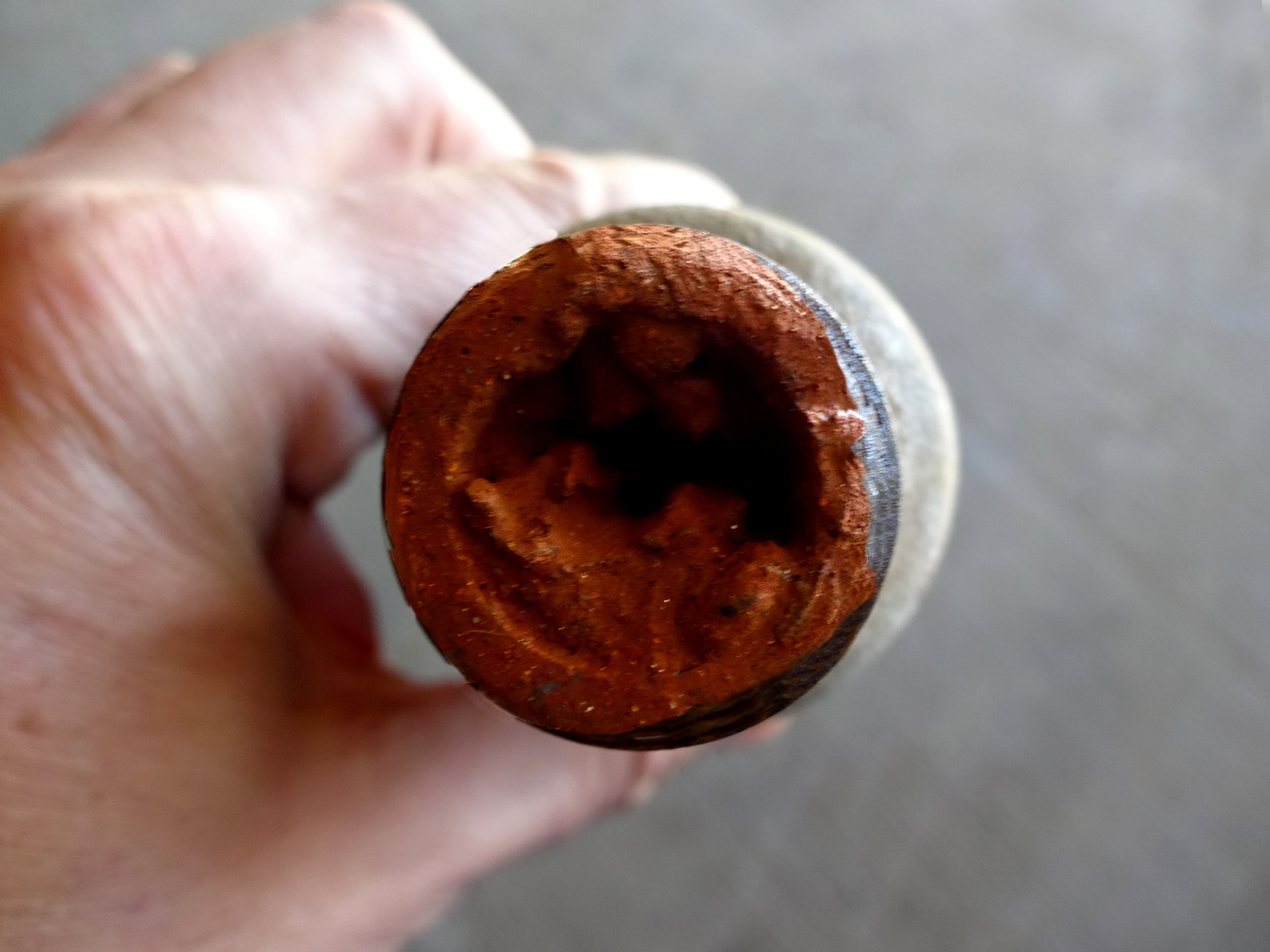
On older service lines there are other causes of resistance. These factors include buildups of deposits on the inside of the pipe, partially closed valves, defective water meters, etc.
It is assumed here that the public water main (the supply source) pressure is largely unaffected by the water going through the pipe. Such as a large municipal water main supplying a relatively small pipe for a building.
The Key Factors Determining the Flow Rate Of Water
The property owner usually has no control over the pressure that is provided by the City Water Main. Nor does a property owner control the length of the run. This is determined by the distance of the City Water Main from the building. The size of the water line is the one vital factor in the flow rate of water that a property owner can control.
For instance, a 60’ long 1″ diameter water service which runs from the City Water Main to the building, will typically provide 8 gallons per minute of flow of water. A 60’ long 1 1/4″ water service line will provide 14 gallons per minute of water. In this case, increasing the size of the water service line just one size will provide you with 75% more water. This is based on the NYC DEP sizing table.
In terms of cost, the increase in size from 1″ to 1 1/4″ costs only around $150.00. Your key takeaway is not to skimp on a small material cost increase at the risk of having an inadequate flow rate of water into your home, or other type of property.
Keep in mind that ultimately the size of the internal plumbing in a building can limit the water available at any particular plumbing fixture. Meaning that no matter how adequately sized the water service line and tap connection may be, inadequately sized inside plumbing will result in low flow or low pressure.
Two Examples of Why Inside Plumbing is a Factor for Flowing Water:
- If your inside plumbing is inadequate, even a properly sized water service line will provide little noticeable effect. If your inside plumbing is too small, the water available to the plumbing fixtures in a building will still be inadequate.
- Even if your inside plumbing is adequate, increasing your water service line past a certain point will have no benefit. The flow of water will still be limited by the size of your inside plumbing. Piping inside your home is almost always smaller than the size of the service line itself.
A licensed and professional plumber following the Plumbing Code should be consulted to determine the proper size for a water service.

An overlooked 3rd factor: Your tap or connection size
An often overlooked factor in the flow rate of water issues is the tap connection. The tap connection is your water service line’s connection to the public water main. Simply put, regardless of the size of your water service line, if your tap connection is too small, you will not receive an adequate flow of water to your premises.
Let’s use the example mentioned above. If you increase the size of your service line from 1″ to 1 1/4″, yet stay connected to an inadequately sized tap connection, you will still not have the proper flow of water into your building.
In many, if not most cases, if you upgrade your water service line, the tap itself has to be upgraded as well in order to achieve a proper flow of water or gpm. This is an often overlooked factor. In terms of domestic water usage, this can result in a wasted effort at correcting a water pressure problem, or water volume issue. In terms of a water line meant for fire protection it can have devastating and catastrophic results.
Water Pressure Explained In Simple Terms
Pressure is the force applied against a certain size surface area. Typically in the U.S.A. it is measured in pounds per square inch (psi). As an example, if a water pipe has 50 psi, it means that every 1” by 1” area of the pipe has a force of 50 pounds being applied against it.
In some cases, water pressure is created by gravity. Meaning the original source of the water comes from a higher elevation. That could be a reservoir or a water tank. In other cases, pumps are used to create water pressure.
How Do You Measure PSI of Water?
Very inexpensive and simple pressure gauges are used for measuring psi on plumbing. To reiterate, in many instances psi has limited meaning for a property owner. More frequently than not the psi is not the issue, or but one of a few issues.
The amount of the flow of water is more frequently adversely affected by the pipe size and the length of the run of the pipe. In terms of flow rate and water pressure, your water lines and the tap connection must be the proper size. Therefore, you should first verify if your water lines are the proper size. If you still have an inadequate flow of water, then you have a pressure problem.
Call A Licensed Plumber Before Trying To Fix A Water Pressure Problem
You and a professional plumber should first verify you have a water pressure problem. Once verified there are some basic measures you can take. However, in many cases, you’ll need an expert plumber to analyze and cure the problem. Here are some of the more common steps that can be taken:
- Water restrictors on shower heads, sinks, and hoses can increase water pressure for those particular outlets.
- Pumps with holding tanks can increase pressure. But, mechanical devices are not an ideal solution.
- Roof tanks (typically found on hi-rise buildings) utilize gravity to increase both pressure and water volume.
Before spending any serious money, it’s best to contact a professional and your local water authority. Your local water authority can verify if the water pressure issue is related to your neighborhood, or just to your property. Verification of conditions is a first vital step before taking random and potentially costly action.
Flow Rate vs. Water Pressure
At this point, you should have a basic, yet useful, understanding of flow rate and water pressure as it relates to your property. What most folks refer to as a water pressure problem can be caused by just one blocked plumbing fitting or a short piece of clogged or inadequately sized pipe.
Low water pressure can also be caused by an inadequate or blocked connection on the public main. Even with this knowledge, it is best to consult with a professional plumber before taking any action. Do not become a homeowner who changes out plumbing parts, hoping to cure a hard-to-diagnose plumbing problem.
What’s the difference between water pressure and flow rate?
Pressure is the force that pushes water through your plumbing system (measured in psi or bar). Flow rate is the actual volume of water delivered to your fixtures over time (measured in GPM or L/min). While they influence each other, they measure completely different aspects of your water system.
Can low water pressure cause low flow?
Absolutely. When water pressure drops below optimal levels, water moves more slowly through your pipes, resulting in weaker flow at faucets, showers, and other fixtures throughout your home.
Can you have low flow but normal pressure?
Definitely. Blockages like mineral buildup, dirty aerators, or pipes that are too small can restrict water flow even when your system maintains adequate pressure. This is why you might have strong pressure at one fixture but weak flow at another.
For smooth water flow, Poiseuille’s equation demonstrates that flow rate Q depends on pressure difference ΔP, pipe radius r, length L, and fluid viscosity μ: Q = (πr⁴ΔP)/(8μL). In practical applications with meters or restrictive fittings, flow rate typically increases proportionally to the square root of pressure difference.
Does increasing pressure always increase flow?
Usually, but only up to system limitations. With fixed plumbing and minimal restrictions, higher pressure differential generally boosts flow rates, though friction losses and equipment constraints eventually limit the benefits.
What units should I use?
For pressure, use psi in the United States or bar in Europe. For flow rate, use GPM (gallons per minute) in the US or L/min (liters per minute) in Europe.
Why does pipe diameter affect flow more than pressure?
Flow rate is extremely sensitive to pipe radius, increasing to the fourth power in smooth flow conditions. Even small changes in pipe diameter can dramatically alter flow rates while pressure remains constant.
Is “strong shower” pressure actually a flow issue?
Frequently, yes. When people complain about “low pressure,” the actual problem is usually low flow caused by restrictive showerheads, mineral deposits, or inadequately sized supply lines.
What’s a good residential water pressure?
Most homes should maintain 45-60 psi, though this varies by local codes and water supplier recommendations. Use a pressure gauge to verify your home’s actual pressure levels.
What’s a typical shower flow rate?
Contemporary showerheads typically deliver 1.8-2.5 GPM in the United States, depending on the specific model and local water efficiency regulations.
How do I measure my home’s flow rate?
Time how long it takes to fill a container of known volume (such as a 1-gallon jug). Calculate flow rate by dividing volume by time. This simple test is recommended by many municipal water departments.
How do I test water pressure at home?
Connect a pressure gauge to an outdoor spigot or laundry connection and check static pressure (with no fixtures running). Then test dynamic pressure while running various fixtures throughout your home.

Expert Water Main Repair and Water Line Replacement
The Balkan Team provides expert home water main repair and main water line replacement. We have expertise in all types of NYC underground plumbing. Balkan Sewer And Water Main Service was founded in 1952. Since its inception, the foundation of the company has been based upon integrity and honesty in all of our dealings.
That solid foundation has enabled us to thrive in every economic climate. That is why guiding you through the decision of doing a sewer repair vs sewer replacement exemplifies our company culture of educating consumers. We feel the more you know, the better we’ll look. The year 2022 actually marked our 70th consecutive year in business under the same family guidance.
As we have grown, we have become increasingly dependent upon a “Team First” approach. What helps ensure a continuation of our high standards, overall integrity, and high company morale, is that same team approach.
Complete client satisfaction has always been the number one goal at Balkan Sewer And Water Main. That is why we are NYC’s largest and most trusted sewer and water main service in New York City. Simply put, if it’s plumbing, and it’s underground, we do it. For over 70 years, and for over 90,000 New Yorkers to date, Balkan is “The Team You Trust”.